Caterpillar Education Program
- Rosetta Wang
- Jul 3
- 3 min read

Updated: Jul 6

Meeting a living caterpillar changes how a person sees the natural world. Our education program places California pipevine swallowtail caterpillars, one of Northern California's most striking native butterflies, into the care of classrooms, museums, libraries, and community groups, together with a short presentation and everything needed to raise them. Participants watch the caterpillars feed, form a chrysalis, and in season emerge as adults before release. It is native-butterfly lepidoptery made tangible: not a picture in a book, but the actual life cycle unfolding in front of you.
How to collaborate with us
This is a program for nonprofits and mission-aligned organizations, and we are genuinely open to collaboration of all kinds. If you are a museum, an educator or school, a nature center, a library, or a community or conservation group, we can bring the caterpillars and the story to you. A typical collaboration looks like this:
We collect a small number of caterpillars from a local pipevine patch and deliver them to your site with a short, hands-on presentation for your group. You host the caterpillars as they grow and pupate, using the simple care notes we provide. We stay in touch throughout, help you time the release, and, where it makes sense, leave a chrysalis behind to overwinter and emerge with you the following spring. Every collaboration doubles as outreach: a chance to bring awareness, education, and a little wonder to your community while supporting a native species.
Our first collaboration: Clark Kerr Pre-school
We launched the program in June 2026 with the Early Childhood Education Program (ECEP) at UC Berkeley's Clark Kerr campus, and it is the model for what we hope to do with many more partners.
On June 8, we collected three caterpillars from the pipevine patch along Strawberry Creek and delivered them to the pre-school with a presentation for the children and staff. Over the following weeks the class watched the caterpillars feed and form chrysalises, and we gifted the school one chrysalis to keep and watch emerge the following spring. In the staff's words, the captivating caterpillars brought the children and teachers so much joy. The collaboration is ongoing, exactly the kind of local, hands-on partnership we would love to build with museums, libraries, and schools across the region.

Who it is for
The program suits anyone who wants a closer connection to native butterflies: early childhood and school educators, museums, nature centers, libraries, and community and conservation groups. No prior experience is needed. Because the caterpillars are easy to observe and undemanding to keep, they work equally well for young children meeting metamorphosis for the first time and for adults deepening a lifelong interest in native lepidoptery.
Why the pipevine swallowtail
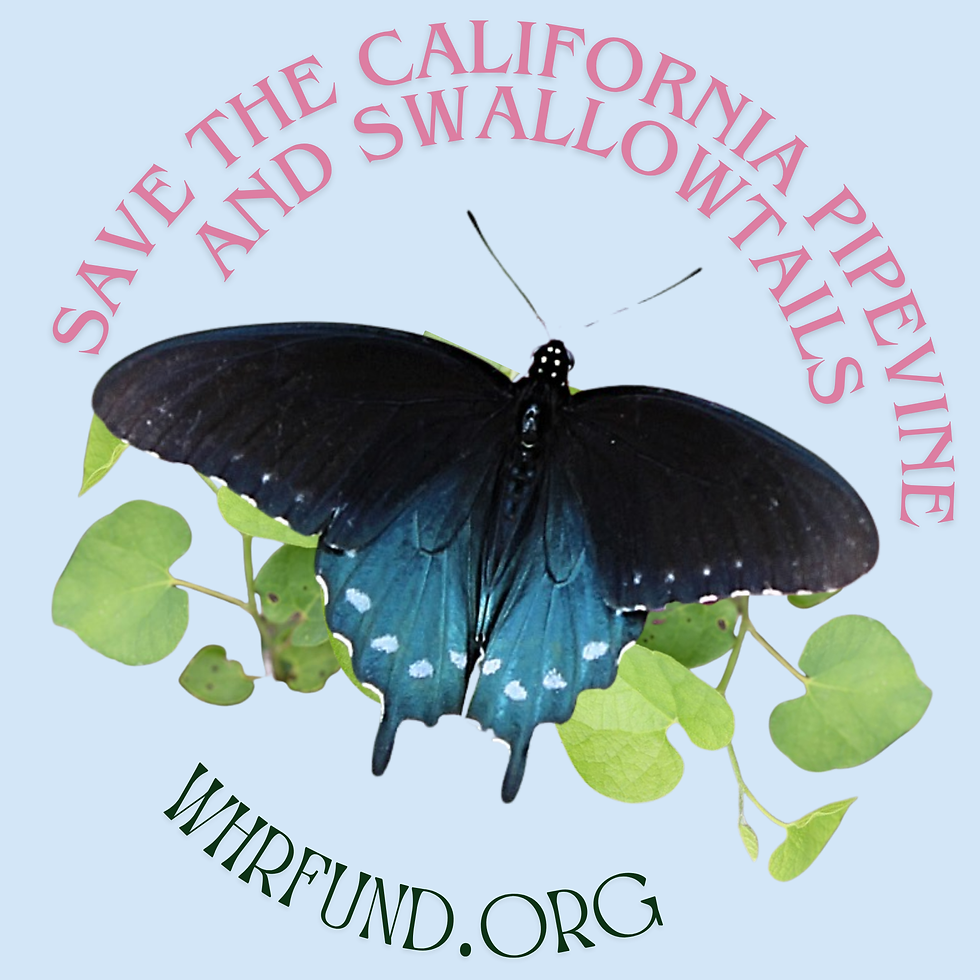
The California pipevine swallowtail (Battus philenor hirsuta) is an obligate specialist: its caterpillars can feed on nothing but the California pipevine (Aristolochia californica), the vine whose toxins they store for their own defense. That tight bond between one insect and one native plant makes the butterfly a powerful teaching story, about food webs, chemical defense, habitat, and why protecting a single patch of host plant can decide whether a local population survives.
Caring for your caterpillars
Every host receives simple guidance. The essentials:
Overwintering pupae: many (but not all) chrysalises will overwinter and emerge the following spring. Keep them in a cool spot out of direct sun.
Moisture: mist lightly with a spray bottle now and then so they do not dry out.
Spring warm-up: in late winter or early spring, move them somewhere brighter and warmer to encourage emergence.
Emergence and release: give the butterfly something to climb when it emerges, let it dry its wings for a few hours, then release. A dark red fluid (meconium) right after emergence is completely normal.
A note on patience: caterpillars collected late in the season will usually form a chrysalis but not hatch until the following year, and pipevine swallowtail pupae can rest for more than one season before emerging, so don't give up on a quiet chrysalis.
Bring the program to your group
We would love to share caterpillars, a presentation, and ongoing support with your museum, classroom, library, or community space, and we are open to collaboration all around. Nonprofits, educators, and organizations of every kind are welcome to reach out about opportunities. Email us at wildreciprocity@gmail.com to start a conversation.


Comments