What UC Berkeley's Pipevine Replanting Plan Leaves Out
- Rosetta Wang
- Jun 30
- 2 min read

Updated: 7 days ago
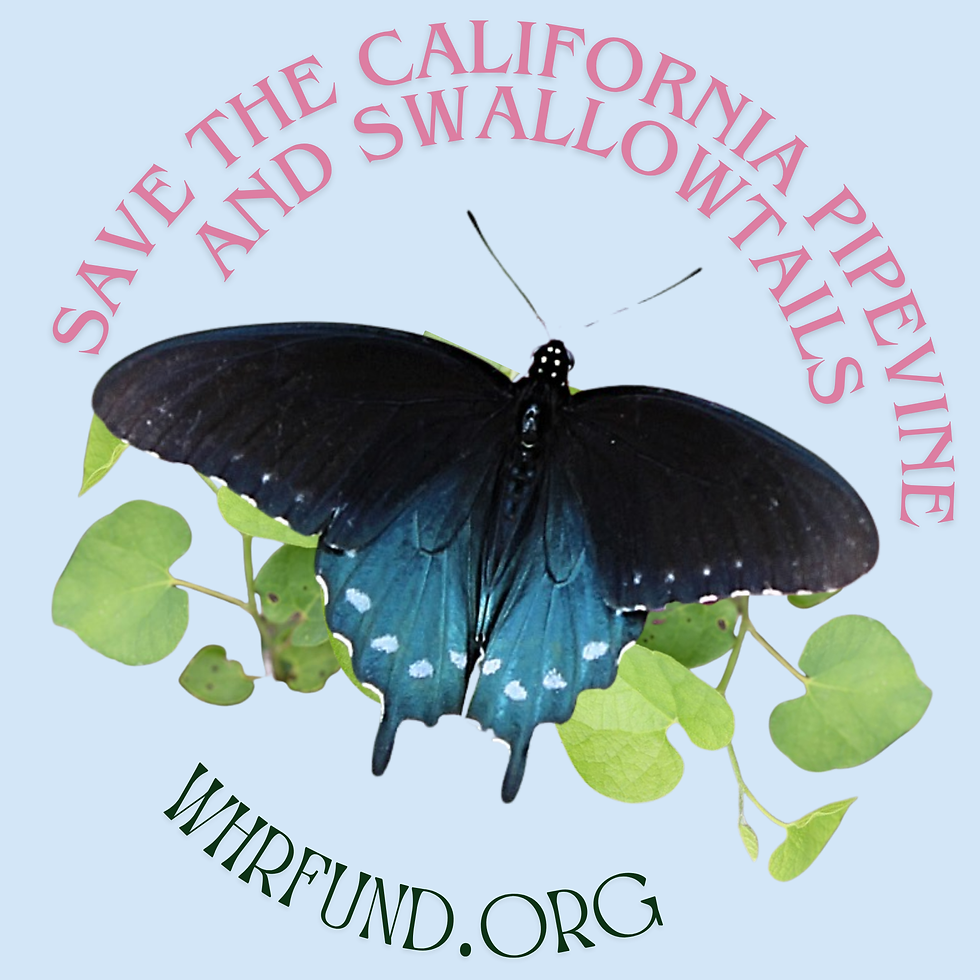
UC Berkeley has acknowledged the California pipevine and the pipevine swallowtail at its Strawberry Creek site and has posted a voluntary preservation and replanting plan for the Clean Energy Campus Utility Improvement Project. We welcome the University's attention to this habitat. But as described, the plan has significant gaps. Here is what concerns us, point by point.

The plan is voluntary and outside the environmental review
The University states that because neither species is formally listed, its mitigation is entirely voluntary, and the replanting plan appears on a project webpage rather than in the project's environmental review (Addendum #8 to the 2021 LRDP EIR). A voluntary plan added after approval, with no stated success criteria, monitoring program, timeline, or responsible party, is not an enforceable commitment, and it was never analyzed as part of the environmental review.
The transplant timing does not work
California pipevine is winter-deciduous. It goes dormant by late summer, and the reliable window to move it is the cool, wet dormant season, roughly November through February. The plan promises transplanting timed to optimal seasonal conditions for plant survival, yet ground disturbance is expected as early as fall. A fall start cannot be preceded by a proper dormant-season transplant, which means the plants would be removed at the worst time of year for the species, or removed with no real transplant at all.
Limited excavation does not match the ground
The plan describes removing only the vegetation necessary. But utility marking paint has been sprayed in a line running through the densest, most established rooting of the pipevine patch, not a narrow edge. The footprint that has been staked covers the core of the habitat.

Feasible, less-damaging alternatives have not been analyzed
The University says rerouting is not possible. Yet it is already excavating and regrading the adjacent paved path for accessibility, and the new power duct bank is new infrastructure whose alignment is a design choice. The utilities could run under the sidewalk, or a few feet west into the adjacent lawn, instead of through the creekside habitat, and existing lines can be de-energized and left in place rather than dug out. These alternatives would spare the habitat and avoid excavating the same ground every time the lines are serviced in the future.
Why this matters
The pipevine swallowtail can breed on no other plant, and functional breeding habitat takes years to decades to establish. Replanting is not a substitute for protecting a mature, actively breeding patch. Recent surveys recorded between 1,000 and 2,000 caterpillars at the campus site in peak months, which is direct evidence of active breeding.
What we are asking
We are asking the University to conduct focused biological surveys, to analyze this habitat and the feasible alternatives through proper environmental review before any ground disturbance, and to sequence any unavoidable work so that transplanting happens in the dormant season. Learn more and take action on our Save the Pipevine page at whrfund.org/save-the-pipevine. To get involved, contact us at wildreciprocity@gmail.com.


Comments